
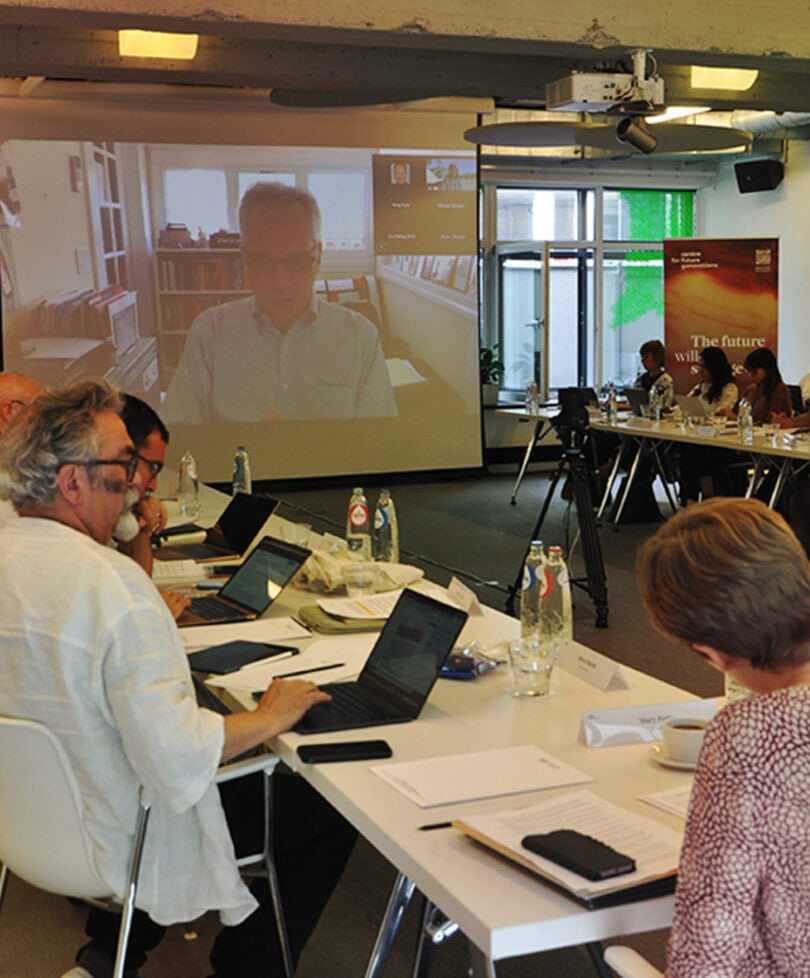
International SRM Monitoring and Detection Workshop
CFG and Duke University brought together scientists, lawyers, and security experts for a full-day workshop to explore the monitoring and detection of solar radiation modifiction (SRM) technologies.
As interest in Solar Radiation Modification (SRM) research grows, discussions are beginning around how detection and monitoring systems might contribute to responsible governance – despite an absence of binding international agreements.
This note summarises the discussions at an exploratory workshop convened by the Centre for Future Generations (CFG) in collaboration with Duke University. The workshop brought together a diverse group of experts, including specialists in policy, law, and security at the EU, national, and UN levels, as well as climate scientists and atmospheric monitoring experts. The workshop explored whether international collaboration on detection and monitoring could facilitate governance and diplomacy. It clarified key terminologies, surveyed existing capabilities, identified potential avenues for collaboration, and drew lessons from bottom-up initiatives in other fields.
How to reduce the risk of unilateral deployment while increasing the chances for inclusive international decisions, given that binding international agreements seem unlikely? What capabilities and systems would it take for the international community to be informed of clandestine deployments? Under which circumstances might technical detection and monitoring collaboration facilitate political cooperation? There are no easy answers to these questions, which is why participants asked for a continuing dialogue involving diverse perspectives.
The discussions revealed a complex landscape marked by the absence of binding international agreements, the possibility for detection and monitoring to foster collaboration, the necessity of shared information to mitigate geopolitical tensions, and numerous lessons from past cases of initiative-building. Going forward, the CFG team heard the wish for:
- A closer examination of lessons from similar international initiatives
- a mapping of the specific monitoring capabilities and involved actors,
- and more conversations to build a shared language and common understanding between the scientific and policy communities with diverse viewpoints.
In this post, we recap key points from each of the four sessions that comprised this day-long workshop.
Bringing separate strands together – where’s the conversation at?
The first session surfaced several separate conversations in scientific, technical, climate, and security policy realms, touching on multiple aspects of SRM detection and monitoring. Participants noted the functional difference between monitoring for detection and continuous monitoring. One set of capacities would be needed to detect clandestine deployment attempts and another for continuously monitoring the impacts in case of a deployment. Participants noted that both require international cooperation to be trusted. Some cautioned that engaging in monitoring could falsely legitimise SRM deployment at a time when research and governance were underdeveloped.
On the technical side, participants noted the urgent need to continue longstanding atmospheric data streams – including from programs currently at risk of budget cuts – to have strong baseline data, including for future detection and monitoring efforts. European efforts led by the European Space Agency (ESA) with two short projects – STATISTICS and ACtIon4Cooling – will help map the knowledge landscape with a forthcoming white paper.
The importance of “who is doing the monitoring, for whom and why” emerged prominently. Not only regarding the collection of data, which can be sensitive, but also the scientific and political interpretation needed. Data is useless without trusted scientific attribution of cause and climate effect, and the political interpretation of intentions. For detection and monitoring to facilitate international cohesion, it would need to be trusted by the intended information recipients. Trust would require a credible technical data gathering infrastructure, reliable scientific processing, organised by transparent, cooperative institutions.
What could monitoring do for international governance?
In a context of eroding multilateralism and rising scepticism toward science, some participants saw monitoring as a necessary first step toward SRM governance, essential for building trust and bridging fragmented understandings. Case studies from fields like nuclear proliferation and asteroid tracking showed how bottom-up scientific collaboration can lay the groundwork for international norms and capacity. Monitoring was seen as a policy option serving multiple functions across stages, from discouraging deployment or other risky actions pre-deployment to informing decisions during and after deployment. Yet challenges remain, including how to communicate different kinds of risk and how to act on emerging data. Several participants stressed that without a clear institutional path, governance may lag behind technological and geopolitical realities – someone, somewhere, needs to begin building the foundations for governance.
Low-threshold opportunities for collaboration
The discussion turned to potential avenues for collaboration on SRM monitoring, particularly how existing scientific infrastructure and Earth observation programs might support transparent, multi-platform data collection. Participants noted the value of integrating observations from satellites, aircraft, balloons and other sources, but they also highlighted the need for continuing scientific efforts that would allow such data integration. Some underscored that sovereignty, geopolitical tensions, and diverging interests could limit cooperation unless the benefits of data sharing are made evident. Strategic risks were flagged, including that in the absence of dedicated civilian and transparent efforts, SRM monitoring could default to being a geopolitical asset or dominated solely by defence-sector involvement. Concerns also arose over who controls access to monitoring platforms whether private-sector roles might deepen data inequalities. The conversation underscored the need to confront these power dynamics and to ensure that those who have the most at stake are prominently involved.
Institutions and cases of monitoring
The final part of the workshop examined institutional models and past experiences – from the Montreal Protocol to methane tracking – to draw lessons that might inform an effort to build an international SRM detection and monitoring initiative. Participants emphasised the challenge of aligning scientific observation with policymakers’ needs, especially when responsibilities are fragmented across agencies or borders. Such complexity grows with multistate involvement, which might suggest that scientific cooperation rather than state cooperation needed to be at the forefront.
Past cases illustrate that not all countries need to contribute equally in a monitoring coalition. Examples from the Climate and Clean Air Coalition underscored the value of focused missions and inclusive governance, but also the need for mechanisms that balance broad participation with sustained, meaningful engagement over time.
Closing discussion: what success might look like
Given SRM’s inherently transboundary nature, participants emphasized the need for inclusivity and transparency grounded in any international coalition-building effort – even amid geopolitical tensions.
Future discussions could explore how to enhance information flows between scientists and policymakers, how to guard against misinformation, and the implications of open versus closed data regimes. Several suggestions were made for expanding the conversation geographically, to include regions beyond Europe and North America and professionally, to bring in civil society as well as security focussed actors.
Participants saw the development of a joint platform facilitating collaboration as a potential “no-regret” option if it balances the interests of advancing responsible research and the near-term prevention of deployment. It is important, however, to recognise differing national incentives and levels of comfort with the topic of SRM. But among the participants there was broad agreement for sustaining momentum by starting to explore more specific ideas and structures for collaboration.