

New CFG Incubator tackles tech policy questions outside the agenda
BRUSSELS – Centre for Future Generations (CFG) today launched a new Incubator, an initiative that will house exploratory and cross-cutting projects designed to push the boundaries of tech governance.
The Incubator will house limited-term projects that explore new and underexplored challenges for the governance of emerging technologies beyond CFG’s established programmes. The incubator is designed to develop solutions to policy problems before they make it to the mainstream – and, ideally, long before they become emergencies – as well as to provide a space to test new approaches to technology foresight and governance.
“By the time a technology issue reaches the formal policy agenda, the space for shaping it is often already narrowing. The Incubator is designed to work earlier – on emerging topics that sit beyond policy siloes, raise difficult political trade-offs, or point to new governance challenges altogether. It’s a place to assess where Europe should be setting the direction, not just reacting to it.”
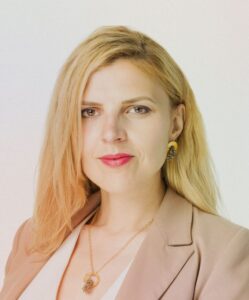
— Velislava Petrova, Chief Programme Officer, Centre for Future Generations
Initial projects
The first tranche of Incubator projects will tackle two questions that sit at the intersection of technology and EU governance:
Tech and the planet explores how Europe can find win-win solutions for its twin challenges: a long-overdue technology transformation and the ongoing climate transition. The project examines where these agendas align and where they create tensions that policymakers will need to navigate.
“We cannot afford to get the twin transition wrong. Member states are already making multi-decade decisions on data centers, grids, and energy without the tools to see where these agendas collide or reinforce each other. This risks not only locking in fossil-fuel-dependent infrastructure, but also triggering local opposition and slowing both transitions.”

— Namita Kambli, Centre for Future Generations
Tech and state capacity investigates how government institutions can increase their capacity through responsible technology uptake and integration. The project asks a deceptively simple question: what do public institutions need to do now to be ready for the future?
“Democracies need to get better at getting things done, and that’s not just a matter of good governance; it’s increasingly a necessity to remain competitive against autocracies. From research pipelines to procurement processes to hiring talent, public institutions are often working with systems designed for a previous era. This project explores how emerging technologies can help governments move faster and deliver more effectively, while strengthening democratic accountability.”

— Sam Bogerd, Centre for Future Generations
The new Incubator reinforces CFG’s commitment to anticipatory governance. While much of Brussels is rightly focused on implementing landmark legislation like the AI Act and DSA, decisionmakers still need independent analysis on what comes next. The Incubator is designed to provide exactly that — helping policymakers prepare for the next generation of governance challenges before they become something that has to be solved yesterday.
CFG established its Brussels headquarters in 2023. In just two years, the organisation has grown to nearly 40 experts and fellows and published more than 50 pieces of analysis, commentary, and research as well as hosting 1000s of speakers and guests at its best-in-class events. In 2025, CFG was named among On Think Tanks’ 100 Think Tanks to Watch — a peer-nominated recognition of organisations demonstrating noteworthy practices and impactful contributions to policy research.
Notes to editors:
- Centre for Future Generations is an independent think-and-do tank created to help decision-makers anticipate and govern rapid technological change. Based in Brussels, CFG works to ensure that emerging technologies are used in the best interests of humanity.
- For more information or to arrange interviews, please contact our Comms & PA Manager, Andrea Castagna: a.castagna@cfg.eu